Where did the persimmons go? A thin year for a tree that may be fading from Ozarks fields
Few persimmon trees in Northwest Arkansas carried fruit this fall. Science points to male and female trees, two-year cycles and a record-hot drought year, and to a slower change in the land that may be leaving fewer trees.
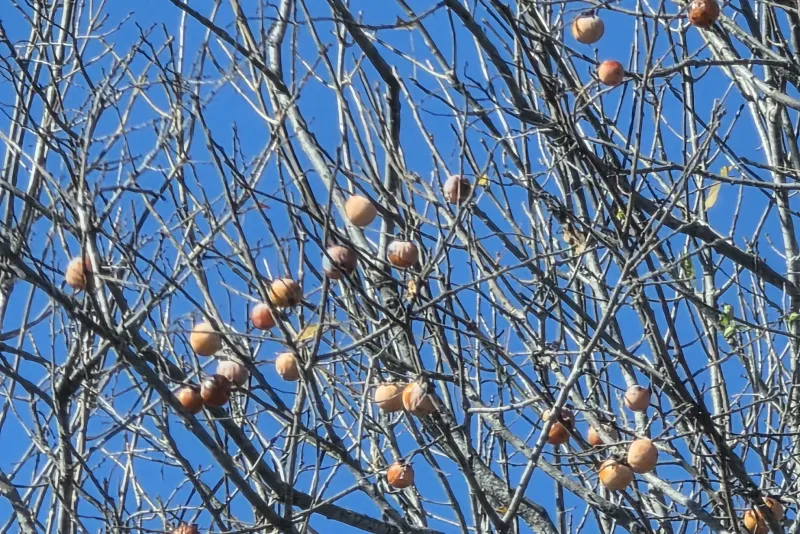
FAYETTEVILLE, Ark. — Persimmon trees that usually hang with soft orange fruit by November stood mostly bare across parts of Northwest Arkansas this fall. An NWA News editor who went looking all season found only two trees carrying fruit: one near Sonora, a small community in Washington County close to the White River, and one in Carroll County. On the editor’s family land, fields that once held many persimmon trees now have hardly any, and over the last few years they have grown harder and harder to find.
No agency has published a report on this year’s persimmon crop in Arkansas or the Ozarks, and NWA News found no study counting how many persimmon trees grow here now compared with the past. But what scientists know about the tree points to several reasons a fall can come up empty, and to a few ways the trees themselves can thin out over time.
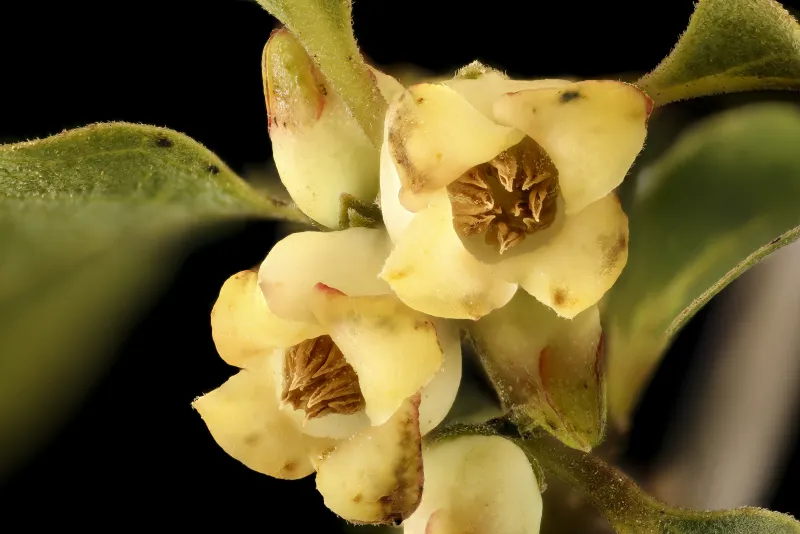
The first reason is that many persimmon trees never bear fruit at all. Common persimmon is dioecious: its male and female flowers grow on separate trees, according to the U.S. Forest Service’s Silvics of North America. Only the females make fruit, and they need a male tree nearby to do it. “Both are needed to produce fruit,” University of Missouri horticulturist David Trinklein wrote last fall. A few trees carry flowers of both kinds, NC State Extension says, but most are one or the other.
Even a healthy female tree does not bear heavily every year. “Good crops are borne about every 2 years under normal conditions,” the Forest Service says, with light crops in the years between. The best bearing age is 25 to 50 years, though a 10-year-old tree sometimes bears. That rhythm may explain one tree the editor drives past every week, the biggest persimmon the editor has ever seen, growing beside the road. Last year it was loaded with large fruit. This year it had not a single persimmon.
A late freeze can also take a crop. It can damage the flowers and make fruit drop early, according to the Forest Service. Arkansas did have a hard freeze this spring, but it probably came too early to matter. Temperatures fell to the low 20s across the state March 16 and 17, a freeze the University of Arkansas System Division of Agriculture said likely wiped out the state’s peach crop. Persimmons bloom much later, in late May and June, according to the Missouri Department of Conservation, and Fayetteville’s Drake Field did not record another freezing temperature after March 17.
What 2026 brought instead was drought and heat. Washington County was already in moderate drought by late May, the National Weather Service in Tulsa reported. August was the warmest on record in Fayetteville, and by Sept. 10, parts of Benton and Washington counties had reached exceptional drought, the worst category on the U.S. Drought Monitor. September was the warmest on record too, and in early October Washington and Carroll counties both had areas of extreme drought. “Trees are stressed or dying, and wildlife is looking for food and water,” the weather service wrote. NWA News found no research on how drought affects the fruit of American persimmon, so whether the dry year played a part is not known.
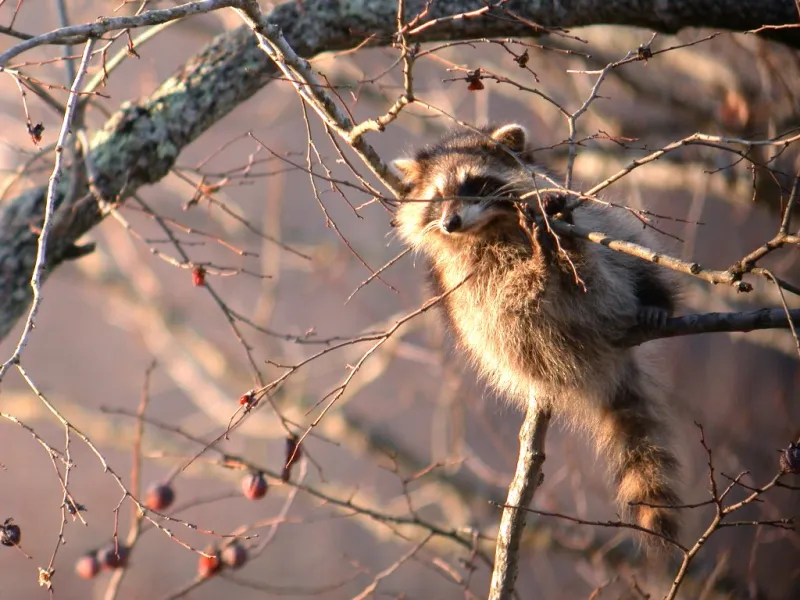
Whatever fruit does ripen tends to disappear. Squirrels, foxes, skunks, deer, black bears, coyotes, raccoons, opossums, quail, wild turkeys, cedar waxwings and catbirds all eat persimmons, according to the U.S. Department of Agriculture’s plant guide for the species, and deer also browse the leaves and twigs in fall and winter.
Fewer trees is a slower story. Persimmon is a pioneer, “an early pioneer on abandoned and denuded cropland,” the USDA guide says, and it is common along roadsides and fence rows. It spreads by root suckers into thickets, and in pastures those thickets are often treated as weeds: “Various herbicides are used to kill the plants,” the guide says. The tree also becomes less common when fire is kept out of the land. And while persimmon can grow in shade, stands where it is common are “temporary and usually replaced with mixed hardwood types” as the woods mature, according to the Forest Service.
That means cleared fence rows, sprayed or mowed pastures, and old fields that have grown back into forest could all leave fewer persimmon trees, even without a disease. No one has measured how much of that has happened in Northwest Arkansas.
For anyone with a female tree that bore nothing this year, the two-year rhythm suggests waiting a season before worrying. The fruit ripens from September into November, and the easiest way to harvest it is to gather what falls, the Missouri Department of Conservation says.
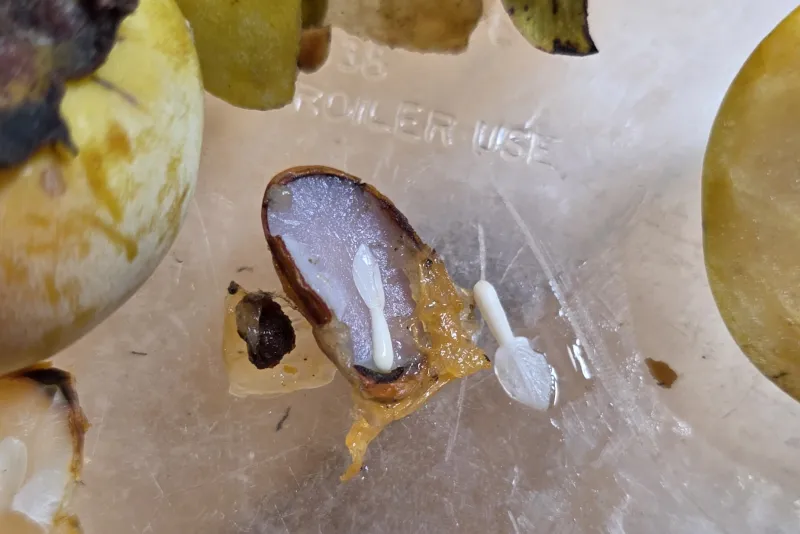
The tree near Sonora gave the editor a chance at an old ritual: splitting the seeds to read the coming winter. The seeds showed spoons, this year and in 2024 too. What that is supposed to mean, and what scientists say about it, is in our companion story on persimmon lore.
Spotted a mistake? Tell us. We fix errors in the open, on the corrections page.