No burn bans in Northwest Arkansas despite the drought. What to know before you burn leaves this fall
Twenty-seven Arkansas counties are under burn bans, all in the central and southern part of the state. Rain in late October and early November kept fire danger in Benton and Washington counties moderate, but forestry experts still urge caution with dry leaves.
By the NWA News desk Saturday, November 14, 20263 min read
FAYETTEVILLE, Ark. — Much of Northwest Arkansas is in extreme or exceptional drought, but none of its counties is under a burn ban. As of Friday morning, 27 of Arkansas’ 75 counties had bans in effect, all of them in the central and southern parts of the state, from Polk, Perry and Pulaski counties south to the Louisiana line, according to the Arkansas Forestry Division.
Burn bans are in the south; our counties have none
Low
Moderate
High
Extreme
Burn ban
Wildfire danger and county burn bans as of 9:13 a.m. Friday, Nov. 13, 2026. 27 of Arkansas’ 75 counties were under a burn ban. Northwest Arkansas counties are outlined in white. Bans change often; the drought and fire page has today’s map. Source: Arkansas Department of Agriculture, Forestry Division. Map: NWA News.
The division rated wildfire danger moderate on Friday in Benton, Washington, Madison, Carroll, Boone and Newton counties. Under the division’s definitions, that means a fire “can start from accidental causes” and “may not become serious, but caution should be taken.” The division had rated all six low through Wednesday, and on Sunday, Nov. 8, they were the only counties in the state at low risk. It raised them to moderate Thursday.
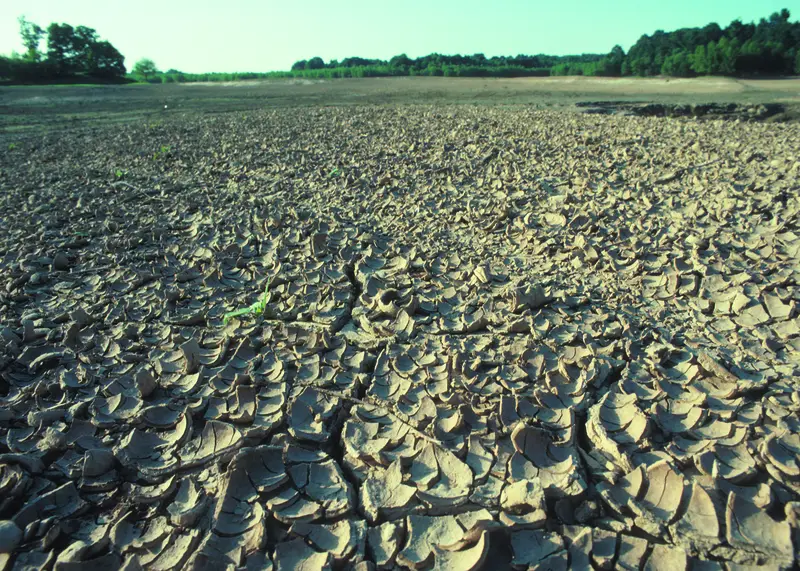
That rating comes even as the U.S. Drought Monitor showed all of Benton, Washington and Carroll counties in extreme drought or worse, and about 69% of Benton County in exceptional drought, the worst category, in its map for the week of Nov. 10. The division sets its danger levels by fuel conditions, drought status and long-term weather forecasts, not drought alone.
Dry, but no burn bans: our counties
County
Burn ban
Wildfire danger
Extreme drought or worse
Exceptional drought
Benton
No
Moderate
100%
69%
Washington
No
Moderate
100%
0%
Madison
No
Moderate
84%
0%
Carroll
No
Moderate
100%
18%
Boone
No
Moderate
70%
0%
Newton
No
Moderate
3%
0%
Burn bans and wildfire danger as of 9:13 a.m. Nov. 13, 2026 (Arkansas Forestry Division). Drought is the share of each county in the U.S. Drought Monitor’s two worst categories, week of Nov. 10. Sources: Arkansas Department of Agriculture, Forestry Division; U.S. Drought Monitor. Chart: NWA News.
Recent rain has helped keep fires in check. Fayetteville’s Drake Field recorded 1.49 inches on Oct. 14, 1.36 inches on Oct. 31 and 1.24 inches on Nov. 3, though September and October both ended well below normal: 1.96 inches in September, against a normal 4.26, and 3.29 inches in October, against 4.48.
It was a different picture this summer. As of Aug. 20, all but six Arkansas counties were under burn bans, and more than 1,000 wildfires had burned more than 27,000 acres in the state this year, the University of Arkansas System Division of Agriculture reported. In late September, every county in the state except five in northeast Arkansas was under a ban.
Burn bans in Arkansas are issued by each county judge, and they can start or end any day. The Forestry Division posts a map of bans and danger levels each morning, and NWA News keeps a daily version for Northwest Arkansas on its drought and fire page.
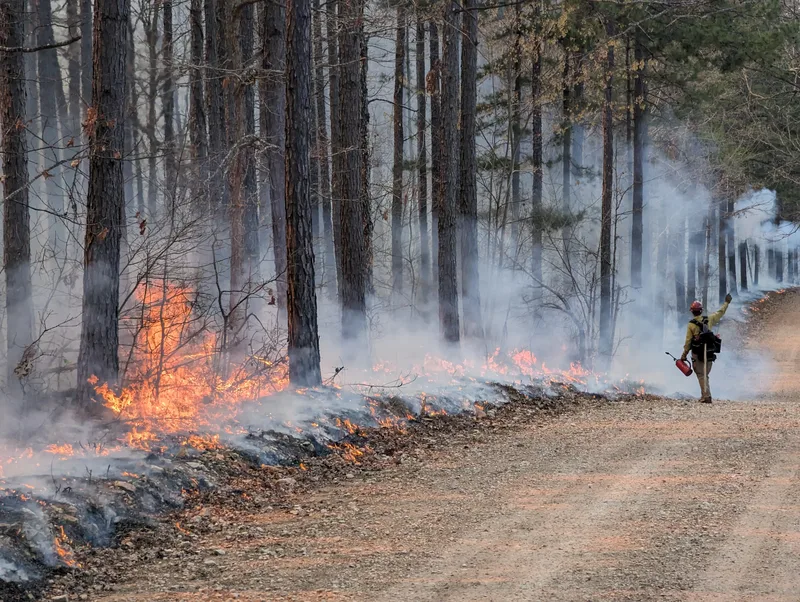
Even without a ban, burning has rules. The Arkansas Division of Environmental Quality says burning yard waste such as leaves, grass clippings and shrub trimmings is “strongly discouraged but permissible in some areas,” and only for yard waste from the property where it grew. Burning household trash and other garbage is not allowed. Cities and counties can add their own limits. Inside Fayetteville, open burning requires a permit from the fire department under city ordinance, and Springdale and Bentonville also require fire department permits.
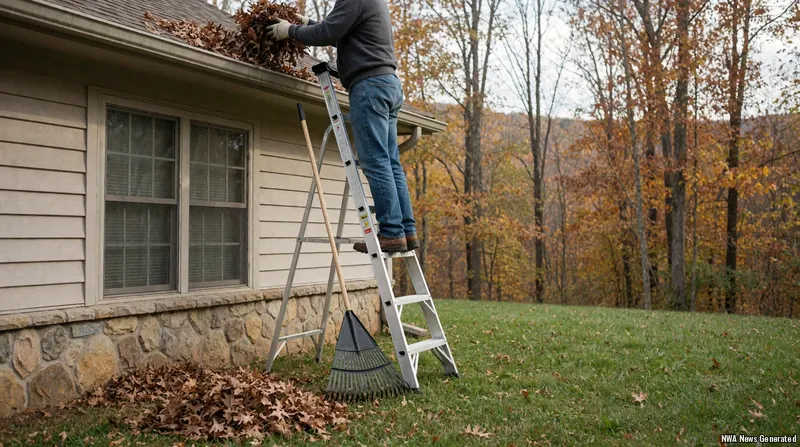
Forestry experts urge care even where burning is allowed. In August, Jaret Rushing, an extension forestry instructor with the Division of Agriculture, recommended avoiding outdoor burning even in counties without a ban, because a single ember can start a fire, and clearing leaves from gutters, roofs and the ground next to the house.
Clearing dry leaves out of gutters and away from the house is one of the steps forestry experts recommend in fire season. Image: NWA News
Rain is possible Sunday, but not certain. The National Weather Service forecast for Fayetteville on Friday gave a 35% chance of rain Sunday afternoon, and the weather service office in Tulsa said drier air to the east makes it uncertain how much rain from the storm will reach Northwest Arkansas. To report a wildfire, call 911.
Drake Field recorded only a trace, and the region’s other airport weather stations recorded none. Exceptional drought spread on this week’s map, Beaver Lake slipped again, and the best chance of rain in weeks, Saturday night, may bring only a little.
Part of Benton County is in the worst category on the national drought map for the first time since 2012, and Beaver Lake is at its lowest level since 2017. The rain that did fall landed unevenly.
Friday brought Northwest Arkansas its hardest freeze so far this season, about two weeks later than usual. Forecasters expect frost and freezing temperatures again Saturday morning, a chance of rain Sunday, and a warmer week after that.
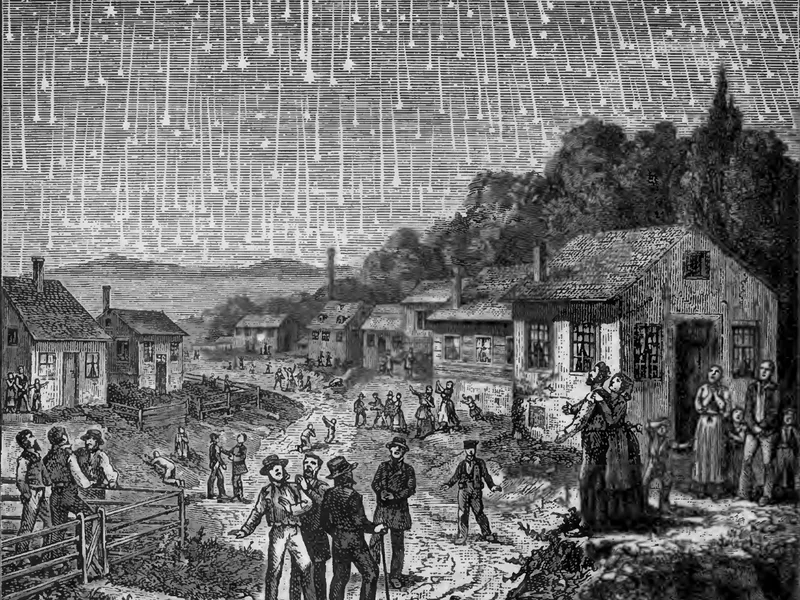
The Leonid storm of 1833 was so bright that a Kiowa camp in Oklahoma dated its history from it. Arkansas has 15 known meteorites, including one that fell at Fayetteville in 1934 and an 800-pound stone that woke Paragould in 1930.
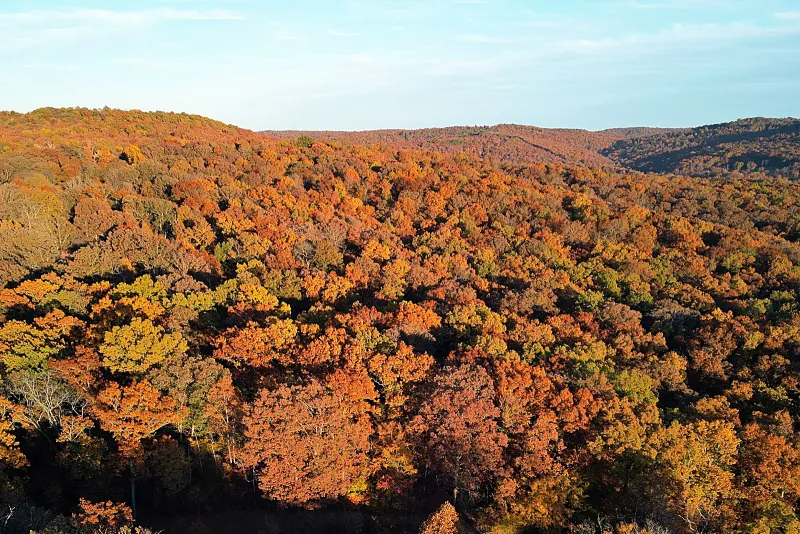
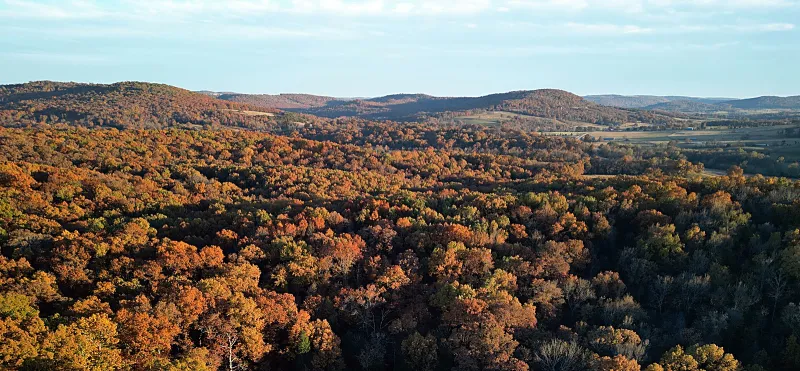
Fall color is a tree packing up for winter. Longer nights start it, sunshine and cool nights paint the reds, and drought, rain and a hard freeze can speed it up or wash it out. Here is what is happening inside the leaves, tree by tree.
Fall color starts in the Rockies and the Great Lakes in late September and reaches Arkansas, Texas and Alabama in late October and November. A map and calendar of typical peak weeks, and 20 places in Arkansas and Missouri to see the leaves.