Rain gardens and ‘low impact development’: how towns try to keep storm runoff out of creeks
The Berryville library project is part of a federal-state program aimed at the leading remaining cause of water pollution.
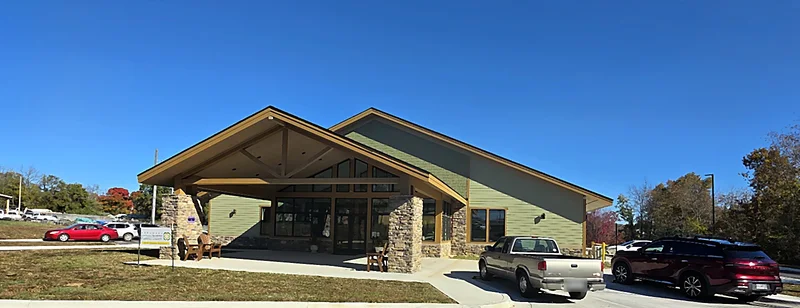
BERRYVILLE, Ark. — When the grant to redesign the Berryville Library grounds began Oct. 1, it put a little-known approach to storm water to work beside Town Branch. The goal, the Kings River Watershed Partnership says, is for built areas to have the same effect on runoff as the land had before construction.
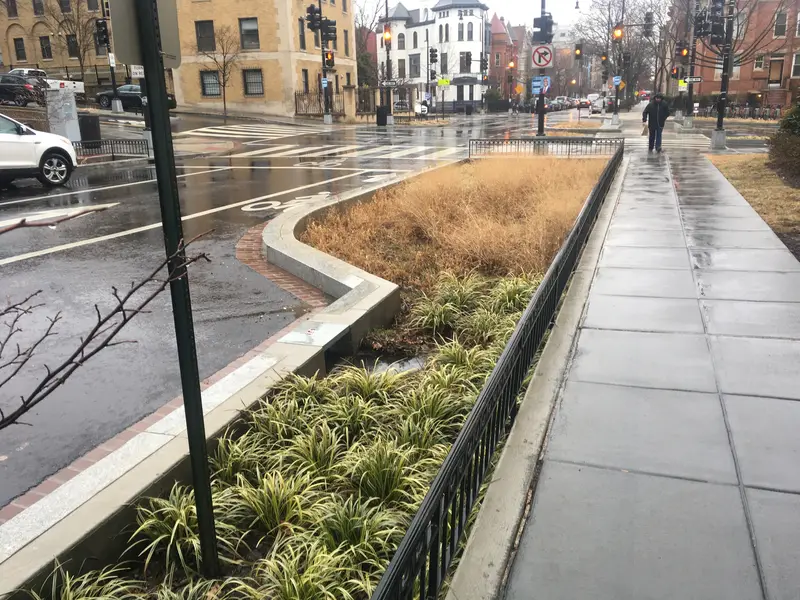
The U.S. Environmental Protection Agency defines low impact development as systems and practices that use or mimic natural processes so storm water soaks into the ground, evaporates, is taken up by plants or is put to use, protecting water quality and habitat. Its examples include rain gardens, bioretention areas, green roofs, rain barrels and permeable pavement.
The problem it targets is runoff. Buildings, pavement and compacted ground do not let rain soak in, which greatly increases the volume and speed of storm water, according to the EPA. The University of Arkansas Cooperative Extension Service says that faster, larger flow picks up sediment, nutrients, bacteria and petroleum products and carries them to streams, and can cause flooding when small natural drainages can no longer handle it.
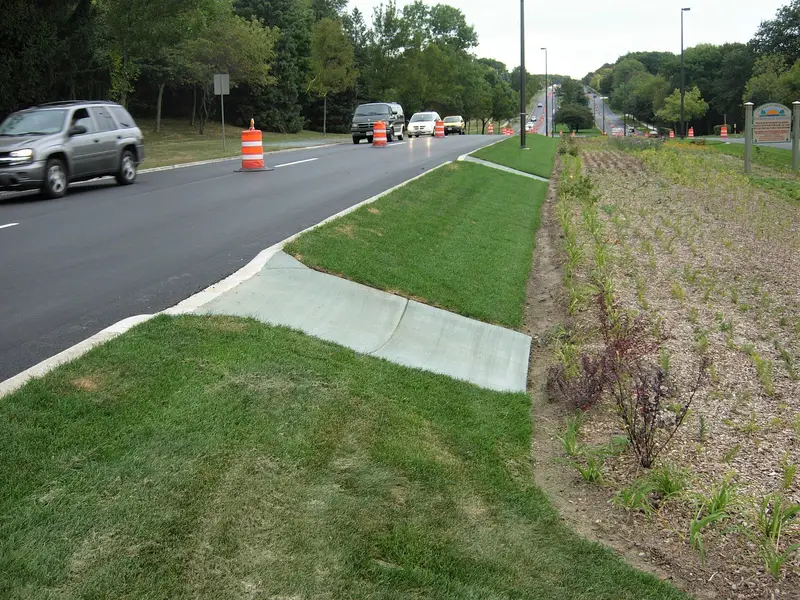
Pollution carried by runoff, rather than piped from a single source, is called nonpoint source pollution. States report it is the leading remaining cause of water quality problems, the EPA says. It includes fertilizer and pesticides from farms and yards, oil and grease from roads, sediment from construction sites and eroding banks, and bacteria and nutrients from livestock, pet waste and failing septic systems.
A rain garden is one of the simplest tools. It is a planted, shallow depression that collects rain from roofs, driveways or parking lots, according to the Extension Service, and its flat bottom and loose soil let the water soak in within about 48 hours after a storm. That is too short a time for mosquitoes to complete their breeding cycle, the Extension Service says.
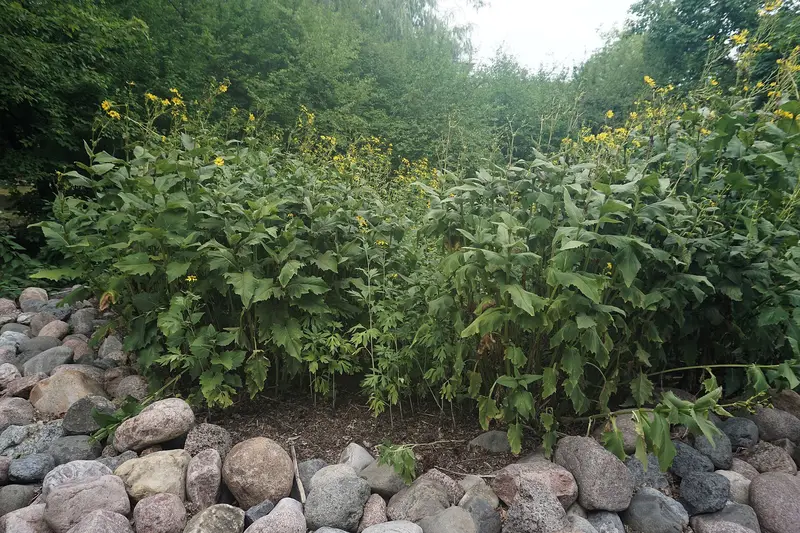
Planted with native species that can handle both wet and dry spells, rain gardens help protect streams from sediment, fertilizer, pesticides and automotive fluids, recharge groundwater, reduce flooding and provide food and shelter for birds and butterflies, the Extension Service says. It recommends topsoil mixed with compost and sand and placing the garden at least 10 feet from a building to avoid foundation problems.
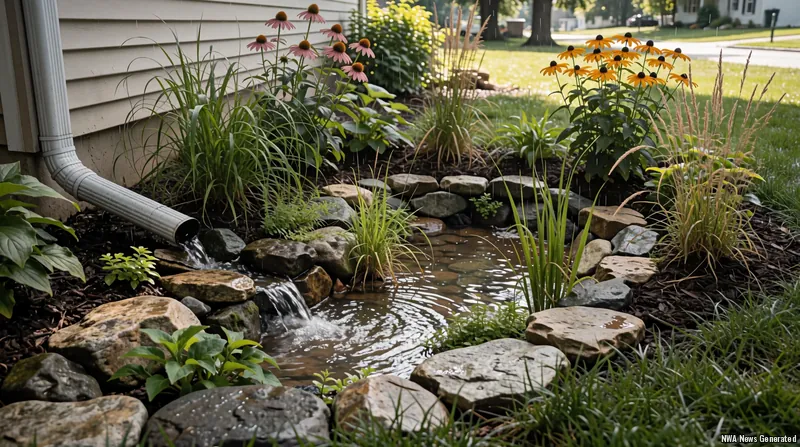
Berryville already has examples. The partnership points to a rain pond at Mercy Hospital in Berryville that collects water from the roof and parking lot, and to Mill Creek at the Berryville Community Center, where a project it led built natural stone steps that hold water in pools.
Much of this work is paid for through Section 319 of the federal Clean Water Act. Amendments in 1987 created the program, which gives states grant money for technical and financial help, education, demonstration projects and monitoring aimed at nonpoint source pollution, according to the EPA.
In Arkansas, the Department of Agriculture oversees the 319 program. Projects must put up at least a 40% non-federal match in cash or in-kind work, and the money is aimed at priority watersheds with EPA-accepted watershed management plans, the department says. Beaver Reservoir, the Upper White River, is one of its 2024-2029 priority watersheds.
In June, the state announced $3,175,000 in 2026 Section 319 grants for 18 projects, with more than $2.3 million in matching money. Northwest Arkansas awards included $135,792 to H2Ozarks for low-impact development, public outreach and workshops in the Kings River watershed; $350,622 to the Beaver Watershed Alliance to reduce sediment and nutrients in the Beaver Lake and Illinois River watersheds; $222,944 to the Washington County Conservation District for storm water, nutrient runoff and stream access practices; and $222,593 to the Illinois River Watershed Partnership for monitoring and education.
H2Ozarks, formerly the Upper White River Basin Foundation, is a nonprofit founded in 2001 whose mission is to protect and improve water in the Ozarks through community commitment, public policy, research and local solutions, according to the group. The partnership says it is working with H2Ozarks, the Berryville Friends of the Library and the state on the library project, which runs 36 months.
Spotted a mistake? Tell us. We fix errors in the open, on the corrections page.