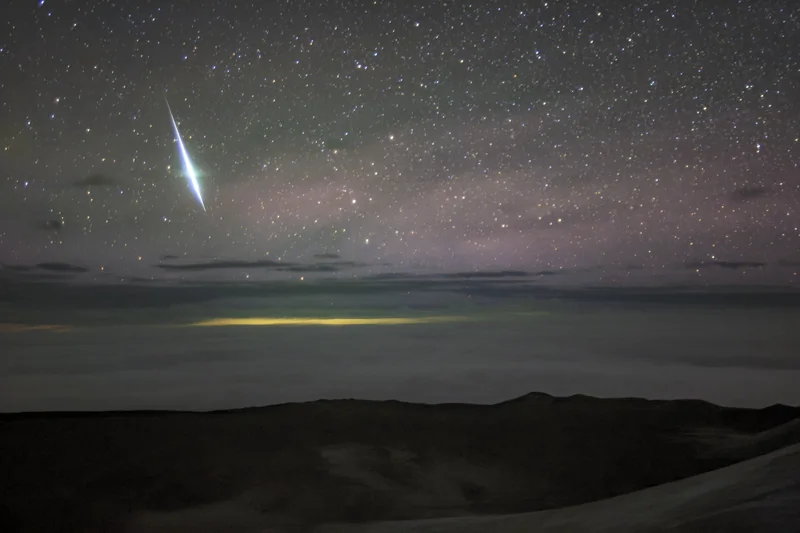
The night the stars fell, and the space rocks that landed in Arkansas
The Leonid storm of 1833 was so bright that a Kiowa camp in Oklahoma dated its history from it. Arkansas has 15 known meteorites, including one that fell at Fayetteville in 1934 and an 800-pound stone that woke Paragould in 1930.
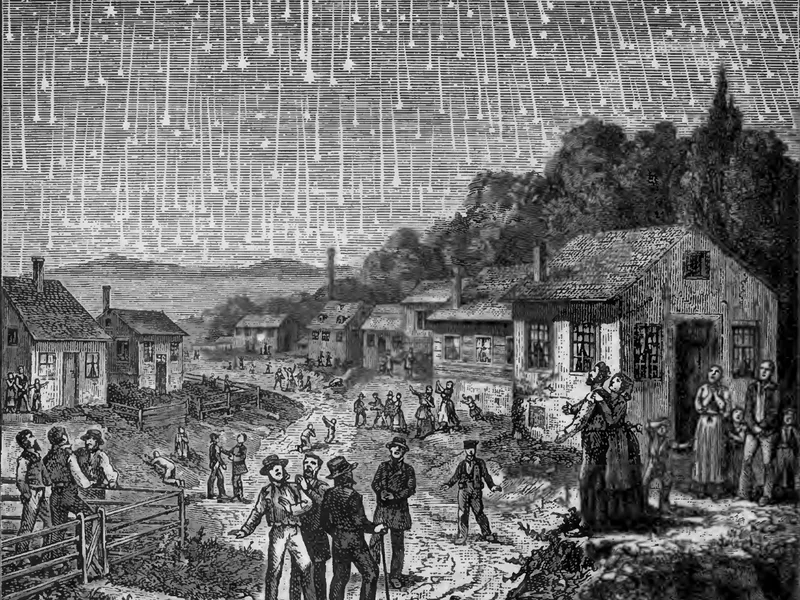
FAYETTEVILLE, Ark. — In the winter of 1833–34, a Kiowa camp on a branch of the Red River, in what is now southwestern Oklahoma, woke to a sudden light. Running out of their tipis, they “found the night as bright as day, with myriads of meteors darting about in the sky,” the ethnologist James Mooney wrote in his 1898 Calendar History of the Kiowa Indians for the Smithsonian Institution. Parents roused their children: “Get up, get up, there is something awful going on!”
It was the Leonid meteor storm of Nov. 12–13, 1833, seen across much of North America. Mooney wrote that “the year when the stars fell” became the first fixed date in Kiowa history, the point the tribe’s calendar keepers counted from. In Missouri, he noted, some took it as a protest from heaven against the persecution of the Mormons then gathered near Independence.
The storm also started a science. Denison Olmsted, a Yale professor, noticed that the meteors seemed to fly out of one spot in the constellation Leo and that the spot moved across the sky with the stars, a sign the meteors came from space and not from the weather, according to the Linda Hall Library. Olmsted gathered reports from around the country and published them in the American Journal of Science. Estimates of that night’s rate run from tens of thousands to more than 100,000 meteors an hour.
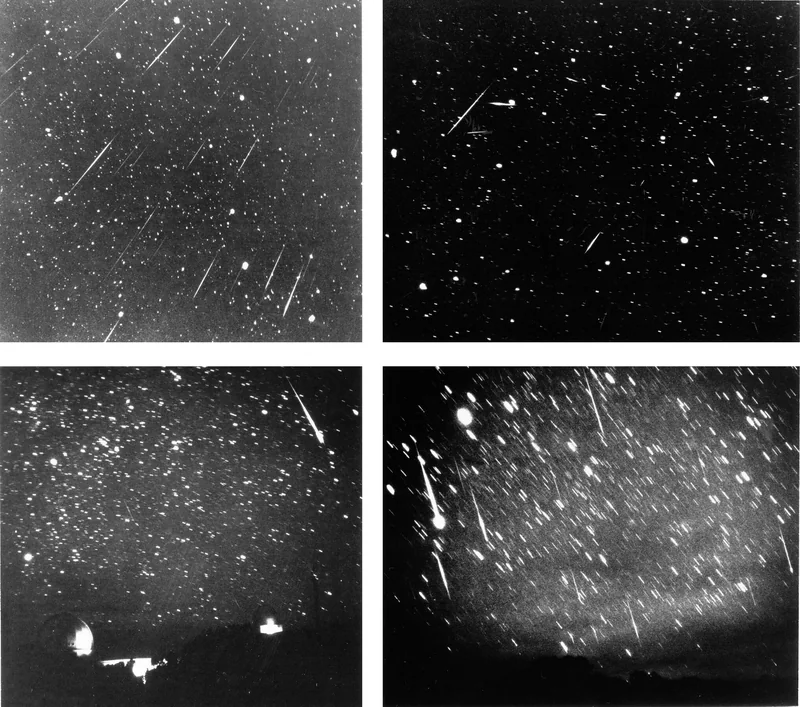
The Leonids can storm again about every 33 years, when their comet, Tempel-Tuttle, comes back around the sun and leaves fresh dust in Earth’s path, NASA says. In 1966, observers in the western United States saw rates as high as 40 meteors a second, according to the American Meteor Society. In 2001, the International Meteor Organization measured a peak of about 1,400 an hour at about 4:30 a.m. Central time on Nov. 18. The comet last passed the sun in 1998 and is due back in 2031. This year’s Leonids, the night of Nov. 16–17, are expected to be ordinary, at best about 15 an hour.
Seen falling (6)Found later (9)Tap a meteorite for details, or pick one from the list to find it on the map.
Seen falling
Found later
Cabin Creek meteorite
★ Seen falling
- Where
- Johnson County
- Fell
- 1886
- Weight
- 107 lb
An iron meteorite: mostly iron-nickel metal, heavy and magnetic.
Learn more: Arkansas Geological Survey: Arkansas Meteorites
Weights and dates from the Arkansas Geological Survey (2023). The map dot marks the county, not the exact spot.Calico Rock meteorite
○ Found later
- Where
- Izard County
- Found
- 1838
- Weight
- 16 lb
An iron meteorite: mostly iron-nickel metal, heavy and magnetic.
Learn more: Arkansas Geological Survey: Arkansas Meteorites
Weights and dates from the Arkansas Geological Survey (2023). The map dot marks the county, not the exact spot.Delaware meteorite
○ Found later
- Where
- Johnson County
- Found
- 2002
- Weight
- 18.4 lb
A stony meteorite: rock with specks of metal, the most common kind.
Learn more: Arkansas Geological Survey: Arkansas Meteorites
Weights and dates from the Arkansas Geological Survey (2023). The map dot marks the county, not the exact spot.Fayetteville meteorite
★ Seen falling
- Where
- Washington County
- Fell
- 1934
- Weight
- 5.2 lb in two pieces
A stony meteorite: rock with specks of metal, the most common kind.
It fell near Fayetteville on Dec. 26, 1934. It is a stony meteorite called an H4 chondrite, with a burned crust and a pitted surface. It was first cut in 1936, and a sample went to the Smithsonian.
Learn more: University of Arkansas Museum record · Arkansas Geological Survey: Arkansas Meteorites
Weights and dates from the Arkansas Geological Survey (2023). The map dot marks the county, not the exact spot.Hatfield meteorite
○ Found later
- Where
- Polk County
- Found
- 1941
- Weight
- weight unknown
An iron meteorite: mostly iron-nickel metal, heavy and magnetic.
Learn more: Arkansas Geological Survey: Arkansas Meteorites
Weights and dates from the Arkansas Geological Survey (2023). The map dot marks the county, not the exact spot.Hope meteorite
○ Found later
- Where
- Hempstead County
- Found
- 1955
- Weight
- 15 lb
An iron meteorite: mostly iron-nickel metal, heavy and magnetic.
Learn more: Arkansas Geological Survey: Arkansas Meteorites
Weights and dates from the Arkansas Geological Survey (2023). The map dot marks the county, not the exact spot.Joe Wright Mountain meteorite
○ Found later
- Where
- Independence County
- Found
- 1884
- Weight
- 94 lb
An iron meteorite: mostly iron-nickel metal, heavy and magnetic.
Learn more: Arkansas Geological Survey: Arkansas Meteorites
Weights and dates from the Arkansas Geological Survey (2023). The map dot marks the county, not the exact spot.Miller meteorite
★ Seen falling
- Where
- Cleburne County
- Fell
- 1930
- Weight
- 36.7 lb
A stony meteorite: rock with specks of metal, the most common kind.
Learn more: Arkansas Geological Survey: Arkansas Meteorites
Weights and dates from the Arkansas Geological Survey (2023). The map dot marks the county, not the exact spot.Newport meteorite
○ Found later
- Where
- Jackson County
- Found
- 1923
- Weight
- 12.3 lb
A stony-iron meteorite: about half metal and half rock, one of the rarest kinds.
Learn more: Arkansas Geological Survey: Arkansas Meteorites
Weights and dates from the Arkansas Geological Survey (2023). The map dot marks the county, not the exact spot.Norfork meteorite
★ Seen falling
- Where
- Baxter County
- Fell
- 1918
- Weight
- 2.3 lb
An iron meteorite: mostly iron-nickel metal, heavy and magnetic.
Learn more: Arkansas Geological Survey: Arkansas Meteorites
Weights and dates from the Arkansas Geological Survey (2023). The map dot marks the county, not the exact spot.Paragould meteorite
★ Seen falling
- Where
- Greene County
- Fell
- 1930
- Weight
- 820 lb and 80 lb
A stony meteorite: rock with specks of metal, the most common kind.
It broke apart over Greene County at 4:08 a.m. on Feb. 17, 1930, waking nearly everyone in Paragould. The biggest piece, more than 800 pounds, was found four weeks later on a farm, and it took five men and a team of horses three hours to pull it out. It came home in 2023 and is on display at the Greene County Museum. A smaller piece, listed at 73 to 80 pounds, is at the Smithsonian.
Learn more: Encyclopedia of Arkansas: Paragould Meteorite · Arkansas Geological Survey: Arkansas Meteorites
Weights and dates from the Arkansas Geological Survey (2023). The map dot marks the county, not the exact spot.Sandtown meteorite
○ Found later
- Where
- Independence County
- Found
- 1938
- Weight
- 7.15 lb
An iron meteorite: mostly iron-nickel metal, heavy and magnetic.
Learn more: Arkansas Geological Survey: Arkansas Meteorites
Weights and dates from the Arkansas Geological Survey (2023). The map dot marks the county, not the exact spot.Slovak meteorite
○ Found later
- Where
- Prairie County
- Found
- the 1960s
- Weight
- 18.1 lb
A stony meteorite: rock with specks of metal, the most common kind.
Learn more: Arkansas Geological Survey: Arkansas Meteorites
Weights and dates from the Arkansas Geological Survey (2023). The map dot marks the county, not the exact spot.Success meteorite
★ Seen falling
- Where
- Clay County
- Fell
- 1924
- Weight
- 7.7 lb
A stony meteorite: rock with specks of metal, the most common kind.
Learn more: Arkansas Geological Survey: Arkansas Meteorites
Weights and dates from the Arkansas Geological Survey (2023). The map dot marks the county, not the exact spot.Western Arkansas meteorite
○ Found later
- Where
- Montgomery County
- Found
- 1890
- Weight
- 3.83 lb
An iron meteorite: mostly iron-nickel metal, heavy and magnetic.
Learn more: Arkansas Geological Survey: Arkansas Meteorites
Weights and dates from the Arkansas Geological Survey (2023). The map dot marks the county, not the exact spot.Most meteors burn up miles above the ground. A few are big enough to reach it. Arkansas has 15 confirmed meteorites, and six of them were recovered after people saw them fall, according to the Arkansas Geological Survey. The state’s rain and thick plant cover make the rest hard to find, the survey says; there is little bare ground where a dark stone would stand out.
One of the six fell near Fayetteville on Dec. 26, 1934. It is a stony meteorite, an H4 chondrite, with a burned crust and a pitted surface, according to its record in the University of Arkansas Museum collection. The geological survey lists it in two pieces weighing 4.95 and 0.24 pounds. The museum record says it was first cut in 1936, with a sample sent to the Smithsonian.
The biggest Arkansas fall came at 4:08 a.m. on Feb. 17, 1930, when a meteor broke apart over Greene County. Livestock stampeded and nearly everyone in Paragould woke up, the Encyclopedia of Arkansas says. The largest piece, more than 800 pounds, was found four weeks later on Joe H. Fletcher’s farm, and it took five men and a team of horses three hours to pull it out. It is the second-largest meteorite ever recovered after being seen falling, the encyclopedia says. A 73-pound piece landed behind the Finch Baptist Church and is now at the Smithsonian.
Harvey H. Nininger, a meteorite collector and professor from McPherson, Kan., bought the big stone from Fletcher for $3,600 and sold it for $6,200 to Stanley Field, president of the Field Museum in Chicago, who gave it to the museum. The money helped Nininger become “the most successful meteorite hunter of the century,” the encyclopedia says. After decades of efforts by Paragould residents, the meteorite came home in 2023 and is on display at the Greene County Museum.
The other falls on the state list are Cabin Creek in Johnson County, a 107-pound iron that fell in 1886; Norfork in Baxter County, a small iron that fell in 1918; Success in Clay County in 1924; and Miller in Cleburne County in 1930. The rest were found later, some long after they landed, from Calico Rock in 1838 to Delaware, in Johnson County, in 2002.
Many rocks that people bring in as meteorites are not, the geological survey says. Its guide to “meteor-wrongs” walks through look-alikes such as clinker from coal furnaces, iron-rich nodules and magnetite. Its quick test: a real meteorite is usually heavier than other rocks its size, has a thin dark crust, often has shallow thumbprint-like dents, and in most cases attracts a magnet. If yours passes, the Office of the State Geologist asks you to call (501) 296-1877 or email osg@arkansas.gov.
If you see a bright fireball, report it to the American Meteor Society. Reports from many witnesses let scientists trace a fireball’s path, and in rare cases point to where pieces may have landed.
Spotted a mistake? Tell us. We fix errors in the open, on the corrections page.