Old pills, real risks: why getting rid of unused medicine matters, and how to do it
Many people who misuse pain pills get them from a friend or relative. Drop boxes in Huntsville take medicine year-round.
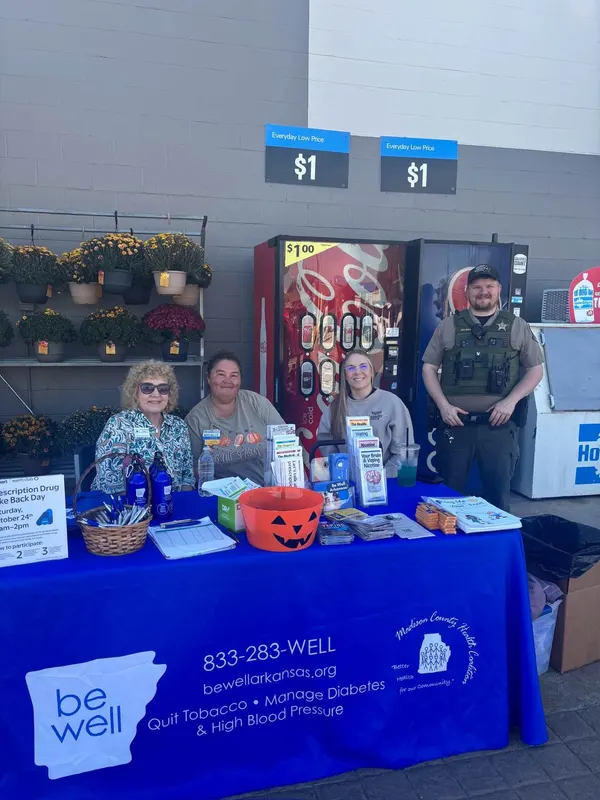
HUNTSVILLE, Ark. — Madison County residents turned in 32.2 pounds of unwanted medicine at the Take Back Day booth outside Walmart in Huntsville last month. They were part of a national effort: the Drug Enforcement Administration says the October Take Back Day collected 645,636 pounds at 4,212 sites across the country, with 4,242 law enforcement agencies taking part.
The DEA says the events, held twice a year, have collected more than 21.6 million pounds of medication since they began.
The reason is what can happen to pills left in a cabinet. In the 2024 National Survey on Drug Use and Health, an estimated 8 million Americans 12 and older misused prescription pain relievers in the past year. Of those, 42.3% got the pills the last time from a friend or relative: 31.3% were given them for free, 6.9% bought them and 4% took them without asking.
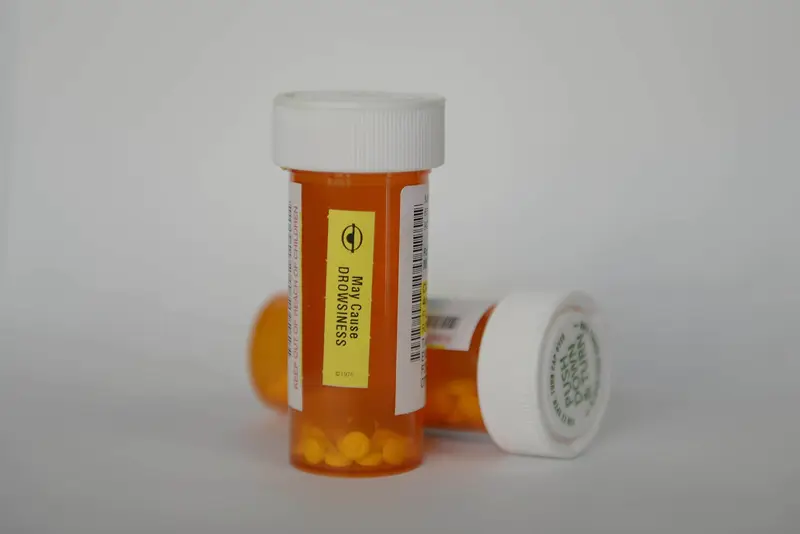
Young people are part of that picture. In the fall 2025 Arkansas Prevention Needs Assessment, 2.0% of students surveyed in grades six, eight, 10 and 12 reported prescription drug use in the past 30 days, a measure the survey uses for use without a prescription. Among students who had used prescription drugs that way, the average age of first use was 12.1.
Arkansas runs its own year-round program. Arkansas Drug Take Back, started in 2010, says it has more than 275 permanent collection sites and has destroyed 329 tons of unused medicine. Sites can be found on its website, in the free ReviveAR app or by calling 501-615-8564.
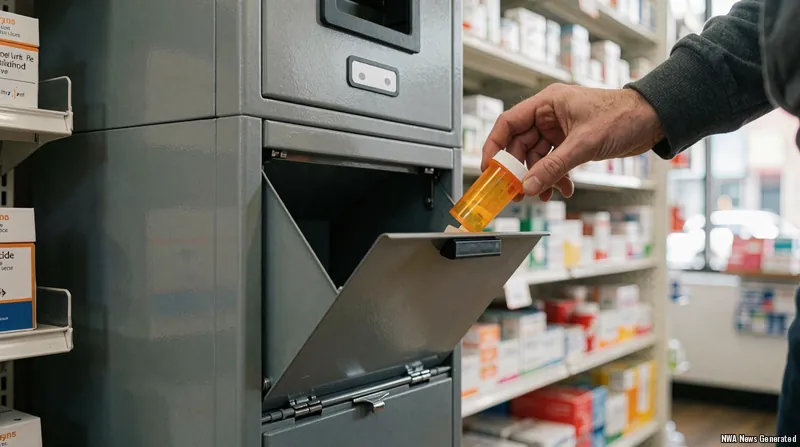
In Madison County, the Madison County Health Coalition lists two permanent drop boxes: at the Madison County Sheriff’s Office, 202 S. Gaskill St., and at the Madison County Courthouse, 201 W. Main St., both in Huntsville.
The Food and Drug Administration says a take-back site is the best way to get rid of most expired or unused medicine. Prepaid mail-back envelopes, sold at pharmacies and online and sometimes free, are another option.
When neither is available, the FDA says most medicines can go in the household trash. Take the drugs out of their containers, mix them with something unappealing such as used coffee grounds, dirt or cat litter, seal the mixture in a bag or can, and throw it away. Scratch personal information off the empty bottles before tossing them.
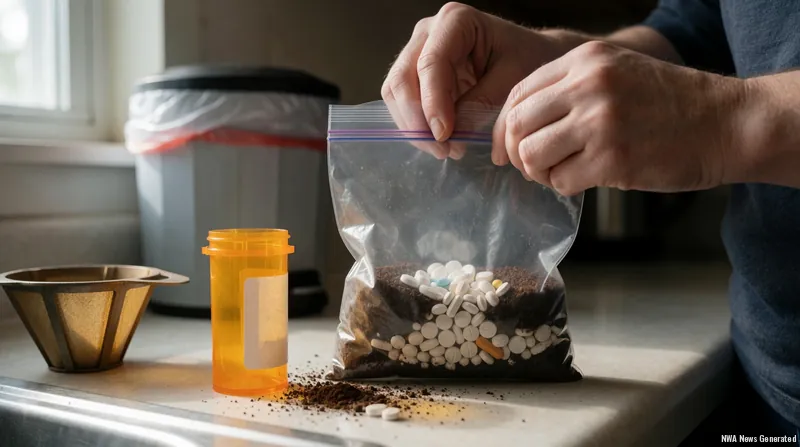
Only medicines on the FDA’s flush list should go down the toilet. Fentanyl patches are one example: even a used patch holds enough of the powerful opioid to be dangerous to someone it was not prescribed for, the FDA says. The agency says the main way drug residues reach rivers and lakes is through people’s bodies, and that its own review found negligible environmental risk from flushing the listed drugs.
The ReviveAR app, from the Arkansas Opioid Recovery Partnership, also lets Arkansans request naloxone, the overdose-reversal drug, and find treatment. For a possible poisoning or medicine overdose, Poison Help is at 1-800-222-1222, and the 988 Suicide & Crisis Lifeline takes calls and texts at any hour.
Spotted a mistake? Tell us. We fix errors in the open, on the corrections page.