How a butterfly lighter than a paper clip finds its way to Mexico
No monarch has made the trip before, yet each fall millions reach the same mountain forests. Scientists have worked out much of how they do it, and how many make it.
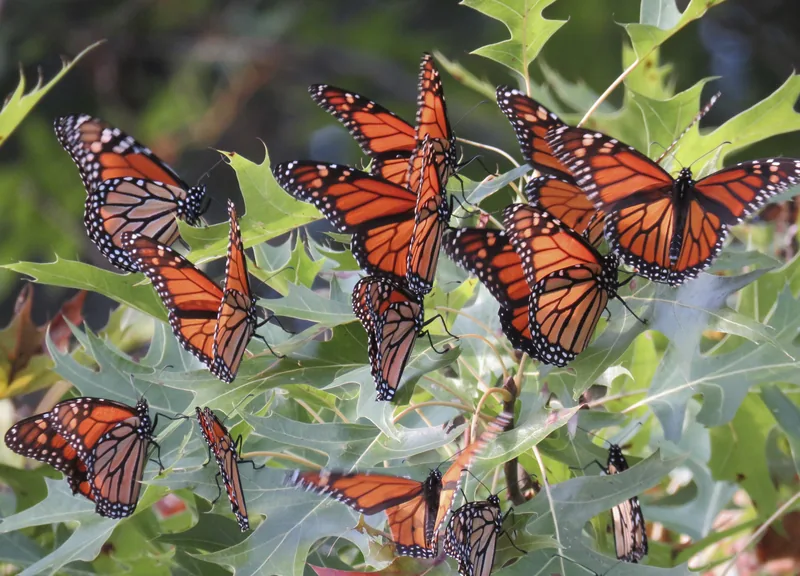
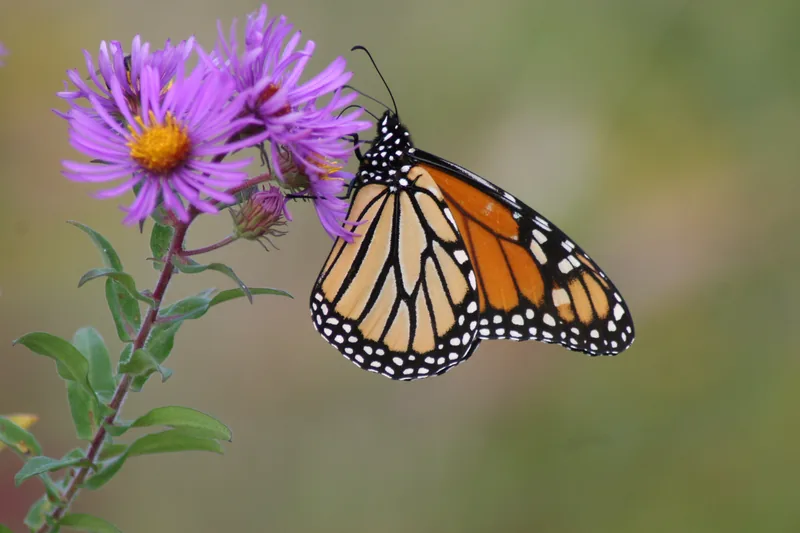
SPRINGDALE, Ark. — The monarch flying south over Northwest Arkansas this fall has never been to Mexico. Neither had its parents or grandparents. The butterflies that made last year’s trip died months ago, and several short-lived summer generations came between them and this one. Yet the fall monarchs find their way to a few mountain forests in central Mexico, some flying as far as 3,000 miles.
The trip is possible because the fall generation is built differently. Summer monarchs live two to six weeks, but those born in late summer can live up to nine months, according to the Arkansas Natural Heritage Commission. They put off breeding, fly south, spend the winter clustered in oyamel fir forests and start back north in the spring.
Their main guide is the sun. Researchers have shown that monarchs use a time-compensated sun compass, adjusting for the sun’s movement across the sky over the day with an internal clock. A 2014 study in Nature Communications found a backup: a light-dependent magnetic compass in the antennae, which can keep them on course on cloudy days.
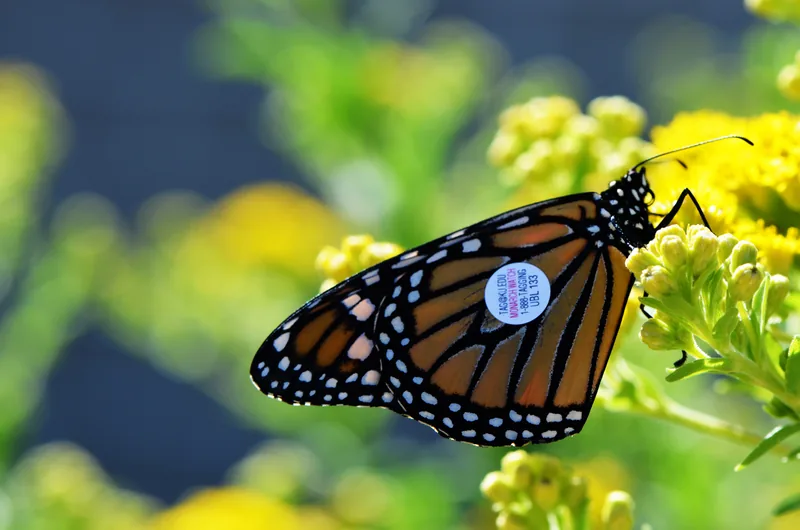
Scientists have followed the trip with tiny tags. Monarch Watch, at the University of Kansas, sends out more than 250,000 tags each fall to volunteers, who stick them on the underside of a hind wing. Tags found in Mexico are worth about $5 each to the local guides who turn them in. In recent years the program has added radio tags read by a network of receiving towers. In fall 2025, 70% of its radio-tagged monarchs were picked up in Oklahoma and 63% in Texas, and the first reached Mexico on Nov. 6.
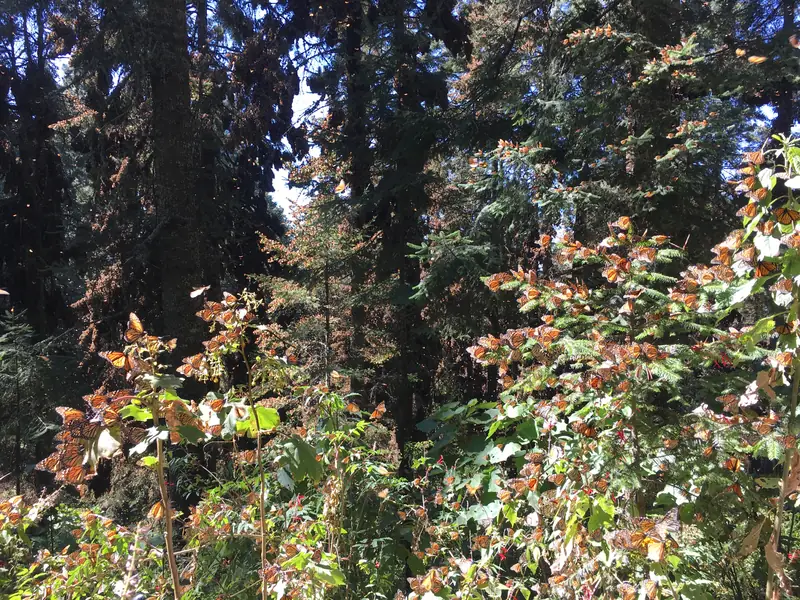
Once there, the monarchs gather in such tight clusters that scientists measure the population by the area of forest they cover. Last winter they covered 2.93 hectares, about 7 acres, up 64% from the winter before, the World Wildlife Fund-Mexico and Mexico’s national protected areas commission reported in March. That is still about 84% below the record of 18.19 hectares in the winter of 1996-97. The low was 0.67 hectares in 2013-14, and scientists have cited about 6 hectares as a level the population can sustain.
The U.S. Fish and Wildlife Service proposed listing the monarch as a threatened species in December 2024 but missed its December 2025 deadline for a final decision. On Sept. 30, 2026, the agency and two conservation groups that had sued filed a settlement in federal court setting a new deadline of June 6, 2030. Monarch Watch noted in early November that the settlement still needs the court’s approval.
Much of what happens next depends on what the monarchs find along the way. Their caterpillars eat only milkweed, and the adults need flowers for fuel, especially in fall. Native milkweed and late bloomers like asters and goldenrod are the most direct help, and sightings reported to Journey North help scientists track the migration year to year.
For the monarchs passing Springdale now, the end of the trip is close. Mexico’s El Rosario sanctuary usually opens to visitors in mid-November, when the colonies have settled in for the winter.
Spotted a mistake? Tell us. We fix errors in the open, on the corrections page.