Modern gun deer season opens Saturday: limits, CWD rules and last year’s harvest in Northwest Arkansas
Hunters in Benton, Washington, Madison, Carroll, Boone and Newton counties checked 14,235 deer last season, nearly matching the year before even as the statewide count fell 7%. All six counties are in the state’s chronic wasting disease zone.
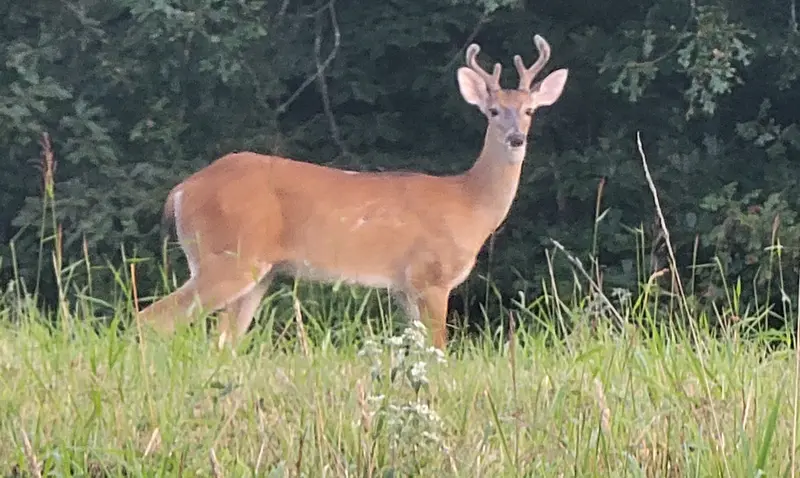
FAYETTEVILLE, Ark. — Modern gun deer season opens Saturday, Nov. 14, across Northwest Arkansas and runs through Dec. 6, according to the Arkansas Game and Fish Commission’s 2026-27 hunting guidebook. The dates are the same in Deer Zones 1, 2 and 6, the private-land zones that cover Benton, Washington, Madison, Carroll, Boone and Newton counties. The opener follows the youth modern gun hunt held this weekend, Nov. 7-8.
Hunters checked 185,922 deer statewide in the 2025-26 season, down from 200,285 the season before, a drop of about 7%, according to the commission’s annual white-tailed deer report. It was the smallest harvest since the 2022-23 season’s 185,579. About 61% of last season’s deer were taken in November, and modern guns accounted for 68.8% of the total. Bucks with antlers made up 50.4% of the harvest, does 44% and button bucks 5.6%.
In the six Northwest Arkansas counties, the count barely moved: hunters checked 14,235 deer, compared with 14,406 the season before. Washington County led the area with 4,023 deer, followed by Benton with 3,335, Madison with 2,975, Boone with 1,638, Newton with 1,211 and Carroll with 1,053. Madison and Boone counties were up from the year before, and the other four were down. Among public lands in the area, the Buffalo National River Wildlife Management Area produced 184 deer and Wedington WMA west of Fayetteville 109.
Bag limits depend on the zone. Each private-land zone allows four deer, no more than two of them bucks with antlers, and the statewide limit is six deer, no more than two antlered bucks. In Zones 1 and 6, a hunter may take three antlerless deer with modern guns and alternative firearms combined. Zone 2, which includes Boone County, allows one antlerless deer, and only during alternative firearms season or the first two days of modern gun season, Nov. 14-15. Button bucks count as antlerless deer and must be checked as button bucks. Every deer must be checked within 12 hours. Dogs may not be used for deer in Zones 1 and 2; in Zone 6 they are allowed, with tighter dates for nonresidents.
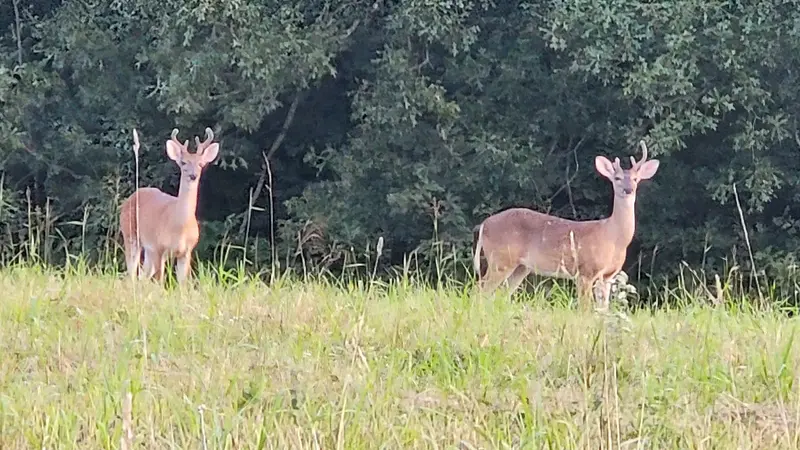
All six counties are in the commission’s chronic wasting disease management zone. Chronic wasting disease, or CWD, is a contagious, fatal disease of the brain and nervous system in deer and elk, caused by a misshapen protein called a prion that can stay in the environment for years, according to the commission. Arkansas first detected it in February 2016. Inside the zone, any buck is legal because antler-point restrictions have been removed, and button bucks do not count toward the two-buck limit. Feeding wildlife is illegal in the zone, but bait may be used to hunt deer on private land from Sept. 1 through Dec. 31 during an open season.
Northwest Arkansas accounts for much of the disease the state finds. In the year that ended June 30, the commission tested 7,880 deer and found 285 positives statewide, plus four positive elk out of 25 tested. Of those deer, 179 came from the six area counties: 49 in Newton, 42 in Carroll, 41 in Madison, 26 in Boone, 18 in Washington and 3 in Benton. Washington County’s total was up from eight the year before. Since 2016, Newton County has had 1,020 positive animals, the most in the state.
Testing is free and voluntary for deer. Hunters can leave the head of a deer, with antlers removed and about 6 inches of neck attached, at one of the commission’s refrigerated drop-off containers, or have samples taken by a participating taxidermist or at a commission regional office after calling ahead. Results are posted online. The commission notes that the Centers for Disease Control and Prevention strongly recommends having a deer tested before eating the meat when hunting where CWD is known to be present. There is no scientific evidence that CWD spreads to people, pets or livestock under natural conditions, the commission says.
Hunters, and anyone with them, must wear at least 400 square inches of hunter orange, chartreuse or blaze camouflage above the waist and a hat or other head garment in one of those colors wherever modern gun or alternative firearms seasons for deer, bear or elk are open, the guidebook says. Pop-up blinds on wildlife management areas must show 144 square inches of blaze orange or chartreuse on all sides during firearms seasons.
Falls from tree stands remain the most common hunting accident in Arkansas. The commission’s hunter incident report for the year ended June 30 lists 16 incidents, two of them fatal, and 10 involved hunters falling from tree stands, including one death. In eight of the 10 falls, the report says, the hunter was not wearing a safety harness. One fall happened in Madison County on Nov. 24, 2025, when a 44-year-old hunter’s foot slipped on his stand’s ladder as he climbed down in heavy rain; he broke a leg and dislocated a shoulder. With 277,267 licensed hunters, the commission puts the rate at about six incidents for every 100,000 hunters.
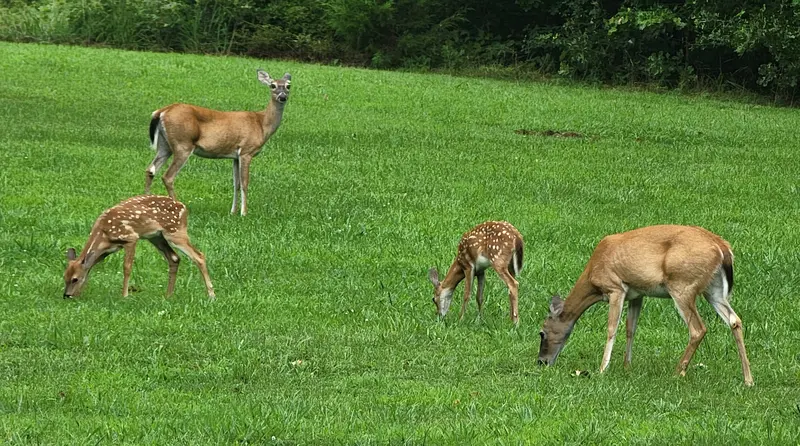
Elk are a different matter. Madison, Carroll, Boone and Newton counties are in the Core Elk Management Zone, where only holders of public-land or private-land elk permits may take elk, and this year’s elk seasons there ended Oct. 30. In Benton and Washington counties, which are outside the core zone, an elk may be taken without a permit during deer season by a hunter legally hunting deer with a weapon legal for that season, with a limit of one elk of either sex. Every elk killed in Arkansas must be reported immediately at 833-356-0824, checked within 12 hours and sampled for CWD.
Hunters with more deer than they need can donate them through Arkansas Hunters Feeding the Hungry, a nonprofit that works with participating meat processors to grind donated venison and send it to food banks and other feeding programs. Processing donated deer is free to the hunter, according to the group’s website, which lists participating processors by ZIP code. The group provides close to 100,000 pounds of venison a year, about 400,000 servings, the commission reported in January, when license buyers’ donations to the group passed $1 million since 2012.
After Dec. 6, deer hunting continues. Alternative firearms season returns Dec. 12-14, a statewide Christmas modern gun hunt runs Dec. 26-28, a second youth hunt is Jan. 2-3, and archery season stays open through Feb. 28. Wildlife management areas, such as Hobbs State Park-Conservation Area and the Buffalo National River, set their own dates and limits, which are listed in the guidebook.
Spotted a mistake? Tell us. We fix errors in the open, on the corrections page.